
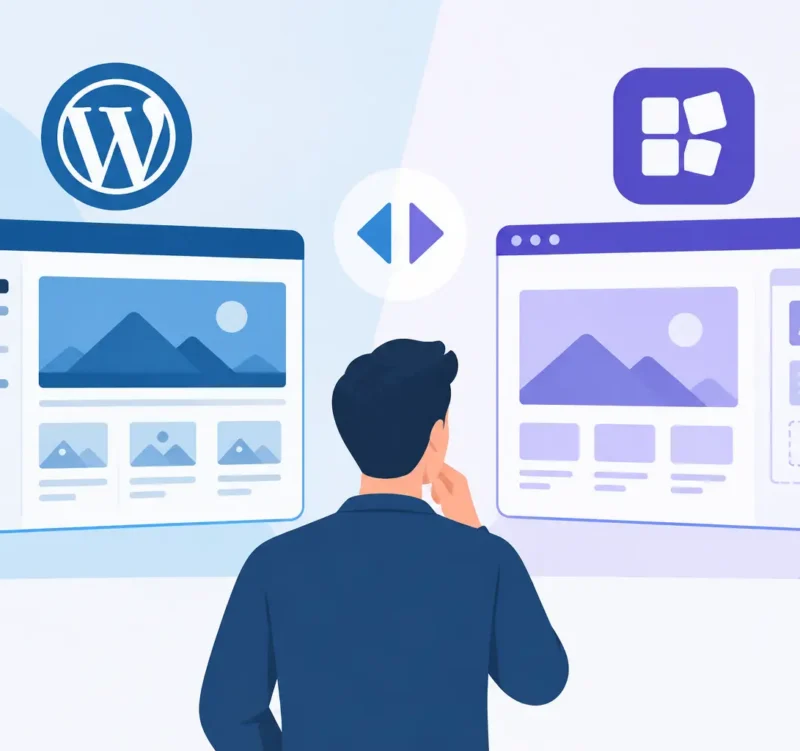
A new website can feel like a quick checkbox until you are comparing WordPress versus website builder options and realizing the choice affects far more than a homepage. It influences how professional you look, how easily customers can find you, what you can change later, and how much help you will need to keep the site working. For a Delaware small business, the right answer is not about picking the trendiest platform. It is about choosing a site that supports the way you actually operate.
WordPress Versus Website Builder: The Real Difference
A website builder is an all-in-one platform designed to make website creation easier. You choose a template, add your text and images, adjust a few settings, and publish. The platform generally includes hosting, security tools, and basic technical support in one monthly package.
WordPress is a content management system with much more flexibility. It can be shaped into anything from a simple five-page service website to a large e-commerce store, membership portal, event calendar, resource center, or custom lead-generation tool. That flexibility also means WordPress needs more thoughtful setup, reliable hosting, regular updates, and someone who understands how the pieces work together.
Neither option is automatically better. A website builder can be a smart, budget-conscious starting point. WordPress can be a stronger long-term business asset. The difference comes down to your goals, your timeline, and how much control your website needs to provide.
When a Website Builder Makes Sense
Website builders are built for speed and simplicity. If you are launching a new business, testing an idea, or need a clean online presence without a long development process, a builder may get you moving quickly. Many include mobile-friendly templates, basic contact forms, scheduling features, and straightforward editing tools.
This approach works best when your needs are uncomplicated. A local consultant who needs an introduction, service descriptions, a few testimonials, and a contact form may not need a highly customized website on day one. The same can be true for a small nonprofit promoting a single annual event or a retail startup with a limited product catalog.
The convenience is real, but so are the boundaries. Your design choices are tied to the templates and tools available on that platform. As your business grows, you may find that a page layout cannot support the information customers need, a form does not connect the way you want, or an online store feature is too limited for your operations. Some builders also make it harder to move the full site elsewhere later.
A builder is not a bad choice because it is simple. It becomes the wrong choice when simplicity starts preventing your business from looking polished, functioning efficiently, or being found by the right people.
The hidden cost of “easy”
The monthly price of a website builder may look lower at first, especially compared with a custom WordPress site. But cost is more than the subscription. Consider the hours spent trying to make a template look less like a template, writing content without a clear page strategy, resizing images, troubleshooting a form, or rebuilding the website when the platform no longer fits.
For some businesses, those trade-offs are acceptable. For others, the time would be better spent serving customers, managing staff, or building relationships in the community.
Why WordPress Is Often Better for Growing Businesses
WordPress is popular because it gives businesses room to grow without forcing them into a one-size-fits-all structure. A professionally developed WordPress site can be tailored to your brand, services, customer journey, and local search goals. Instead of squeezing your business into a prebuilt layout, the site can be organized around what helps customers trust you and take action.
For example, a contractor may need individual pages for roofing, remodeling, repairs, and service areas. A professional practice may need provider biographies, appointment requests, frequently asked questions, and carefully organized service pages. A restaurant may need menus that are easy to update, event announcements, catering information, and online ordering connections. These needs can all be supported with WordPress when the site is planned well.
WordPress also gives you greater ownership over the website itself. You can change hosting providers, add functions as your needs change, and work with the marketing or development partner that is right for you. That matters when your website becomes a central part of how customers find, evaluate, and contact your business.
Better support for search visibility
A beautiful website that cannot be found is not doing its full job. WordPress offers strong tools for search engine optimization when it is built with a clear structure, useful content, fast performance, and proper technical setup.
That does not mean WordPress automatically puts you at the top of search results. No platform can promise that. A website builder can also rank well when the site is thoughtfully built. Still, WordPress usually provides more control over the details that matter as your SEO program expands, including page structure, service-area content, redirects, schema markup, image optimization, and content publishing.
For local businesses competing in Wilmington, Millsboro, and surrounding communities, that flexibility can be valuable. Customers often search with a specific problem and location in mind. A website should give them a clear answer, show them why you are credible, and make it easy to call or request a quote.
More flexibility requires more responsibility
WordPress is not maintenance-free. Software updates, plugin compatibility, backups, security monitoring, and performance checks should be handled consistently. An outdated WordPress website can become slow, vulnerable, or unreliable.
That is not an argument against WordPress. It is a reason to treat your website like a business tool rather than a one-time purchase. With a dependable maintenance plan and a responsive team behind it, WordPress can stay secure, current, and useful without placing the technical burden on your staff.
Compare the Choice by What Your Business Needs
Before choosing a platform, start with the work your website needs to do. If it only needs to establish a basic presence for the next year or two, a builder may be enough. If it needs to generate leads, support marketing campaigns, publish useful content, integrate with business systems, or grow alongside your organization, WordPress deserves serious consideration.
Think about these practical questions:
- Will customers need separate pages for multiple services, locations, products, or audiences?
- Do you expect to invest in SEO, paid advertising, email marketing, or social campaigns that need dedicated landing pages?
- Will staff need to update content regularly without disrupting the site design?
- Do you need features such as online payments, event registration, appointment scheduling, gated resources, or custom forms?
- Is your current website likely to need more functionality within the next two to three years?
If your answers are mostly no, a builder may be a sensible fit. If several answers are yes, choosing WordPress now can prevent an expensive rebuild later.
Design Still Matters More Than the Platform
A platform does not create trust. The details do. Clear messaging, professional photography or graphics, easy navigation, readable type, strong calls to action, and pages that load quickly all shape a visitor’s first impression.
A poorly planned WordPress site can be confusing. A well-built website builder site can be effective. The strongest choice is the one supported by a clear brand, a smart content plan, and design that makes it easy for people to understand what you do.
That is especially true for small businesses that rely on reputation. When a potential customer compares three local providers, your website may be the first proof that you are organized, established, and ready to help. It should not make them hunt for services, wonder whether you are still in business, or hesitate to contact you.
Choose for the Business You Are Building
The WordPress versus website builder decision is not a technical contest. It is a business decision about control, growth, budget, and support. Choose a website builder when speed and simplicity are your top priorities and your requirements are modest. Choose WordPress when your website needs to become a flexible marketing foundation that can keep pace with your business.
If you are unsure, do not start by asking which platform is best. Start by asking what you need customers to do after they find you. A clear answer will point you toward a website that helps your business look its best, get noticed, and keep moving forward.