
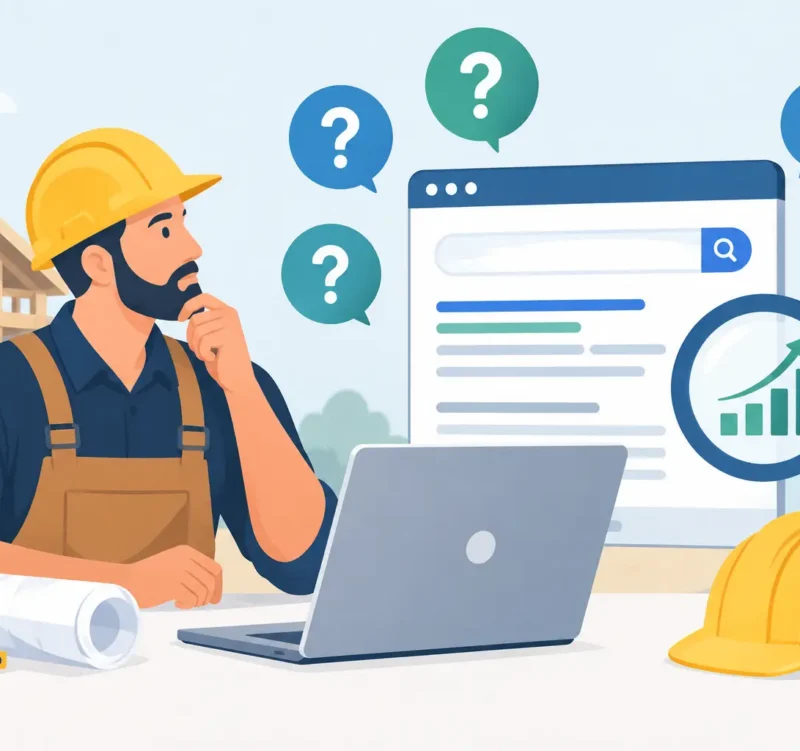
A homeowner in Wilmington searches for an emergency roofer at 8 p.m. Another searches for a kitchen remodeler in Millsboro during lunch. If your company does not appear when those local searches happen, a great crew and strong word-of-mouth may not be enough. The right contractor SEO questions help you focus on work that gets your business found, looks professional, and supports real lead generation.
Search engine optimization should not feel like a mystery or a monthly bill with no clear purpose. For contractors, it is about making it easy for nearby customers to understand what you do, where you work, and why they should call you instead of the next company on the list.
Contractor SEO Questions That Affect Real Leads
1. Can people find us for the services we actually want to sell?
Many contractor websites use broad language such as quality work, experienced team, or full-service contractor. Those messages build credibility, but they do not always match what a homeowner types into a search bar. A customer searching for basement waterproofing, deck building, commercial electrical work, or HVAC repair needs a clear path to that exact service.
Each priority service deserves useful, well-written website content. That does not mean creating dozens of thin pages that repeat the same paragraph with a different town name. It means explaining the service, the problems it solves, what the process looks like, and how customers can get an estimate. Clear service pages help search engines understand your business and help prospects decide whether you are the right fit.
2. Are we showing up in the areas we truly serve?
Local contractors often serve more than one town, county, or state line. Your site should reflect that service area accurately, especially when customers commonly search by location. A Sussex County landscaper, for example, may need visibility in Millsboro, Lewes, Rehoboth Beach, and Georgetown, while a northern Delaware contractor may be focused on Wilmington and nearby communities.
The trade-off is relevance. Claiming every city within 100 miles can make your messaging feel generic and may attract leads that are too far away to be profitable. Start with the locations where your crews work regularly and where you can compete for business.
3. Is our Google Business Profile complete and active?
For many local searches, your Google Business Profile is the first thing a prospect sees. It needs the correct business name, phone number, website, hours, service categories, and service area. Recent project photos, updates, and prompt responses to reviews also make the listing more useful.
A profile alone will not carry your entire SEO program, but it is a critical local signal. If your website says one phone number, your profile lists another, and an online directory has an old address, customers and search engines get mixed messages. Consistency builds trust.
4. Do our reviews reflect the quality of our work?
Reviews are not just a reputation tool. They influence whether a homeowner calls, requests an estimate, or keeps scrolling. A steady pattern of honest, recent reviews tells people your company is active, responsive, and dependable.
Ask for a review after a successful job, while the experience is still fresh. Make the request simple and personal. Never pressure customers for a five-star rating or use copied review language. A few thoughtful details about the project, communication, or workmanship are more credible than a page of vague praise.
5. Does our website work well on a phone?
A contractor website often loses leads for a basic reason: it makes a rushed customer work too hard. If the phone number is difficult to find, the estimate form is frustrating, project photos load slowly, or text is hard to read, a visitor may leave before contacting you.
Mobile usability is part of being found and part of being chosen. A clean layout, visible calls to action, fast loading pages, and simple contact options give your SEO traffic somewhere useful to go. Rankings matter, but conversions pay the bills.
6. Are we using real project photos and proof of experience?
Stock images can make a site look polished, but they rarely prove that your team has completed a local project like the one a customer has in mind. Before-and-after photos, jobsite images, testimonials, project descriptions, certifications, and team information give your company a real face.
For visual trades, this content does double duty. It strengthens trust with visitors and gives search engines more context about your services. A project page about a deck installation in a nearby community can be more persuasive than a generic paragraph about craftsmanship.
7. What keywords are bringing the right traffic, not just more traffic?
More visits are not automatically better. A company that installs high-end replacement windows does not need thousands of visitors looking for free window repair advice if none of them are likely to become customers.
Ask which searches lead to calls, form submissions, and estimate requests. Then compare those leads with your ideal jobs. SEO works best when it supports your business goals, whether that means larger commercial projects, recurring maintenance contracts, emergency repair calls, or a specific high-margin service.
8. How long should contractor SEO take?
There is no honest answer that promises page-one rankings by a certain date. Your timeline depends on your market, competition, website condition, review profile, service area, and the strength of competitors already appearing in search.
Some improvements, such as correcting business information or repairing broken website pages, can help quickly. Building authority for competitive searches usually takes longer. Think in months, not days. The right plan creates steady progress and gives you reporting that explains what is improving, what needs attention, and how leads are tracking.
9. Should we invest in SEO, paid ads, or both?
It depends on your immediate needs and budget. Paid search can put your company in front of customers quickly, which is useful for seasonal demand, new service launches, or urgent lead needs. SEO builds a stronger long-term presence that can continue bringing in prospects without paying for every click.
For many small contractors, the best approach is not choosing one forever. A focused SEO foundation can support paid campaigns, while paid search can fill gaps as organic visibility grows. The key is knowing where each dollar is going and whether it produces qualified opportunities.
10. What should we expect from an SEO partner?
You should expect plainspoken communication, not a pile of jargon or vague promises. A good partner should explain the work being completed, show how your website and local presence are improving, and connect reporting to business outcomes whenever possible.
Ask how often you will receive updates, who handles website changes, whether content and design are included, and how the work fits with your other marketing. Contractors benefit when branding, website updates, print materials, project photography, and SEO support one clear public image instead of pulling in different directions.
The Questions to Ask Before You Sign Anything
Before starting an SEO program, ask for a clear assessment of your current website, local listings, priority services, target towns, competitors, and lead goals. Be cautious of guarantees that promise a specific ranking position. Search results change constantly, and no ethical agency controls them.
Also ask what happens if you stop the program. You should own your website, content, business profiles, and accounts. Ongoing SEO can be valuable because competitors keep improving too, but your business should never be held hostage by inaccessible assets or unclear reporting.
11. Are we measuring phone calls and estimate requests?
Rankings are useful, but they are not the finish line. A contractor can rank well for a broad search and still receive poor-quality inquiries. The better question is whether your visibility is producing calls, form submissions, booked consultations, and profitable work.
Track the source of leads when possible. Ask new customers how they found you. Over time, those answers help you see whether SEO is bringing the right jobs and where your website needs to do a better job of qualifying prospects.
12. Is our online presence ready for the next busy season?
The best time to improve your search presence is before the phone needs to ring. Roofing, landscaping, HVAC, remodeling, and many other trades have seasonal peaks. Building service pages, gathering reviews, photographing completed work, and improving your site during slower periods puts you in a better position when demand rises.
A polished local presence does not happen by accident. It comes from consistent details: a website that looks credible, accurate business information, clear services, real proof of work, and a plan that fits your budget. If marketing has felt scattered or overdue, start with the questions that reveal the biggest gaps. Then take the next practical step to get your business noticed.