
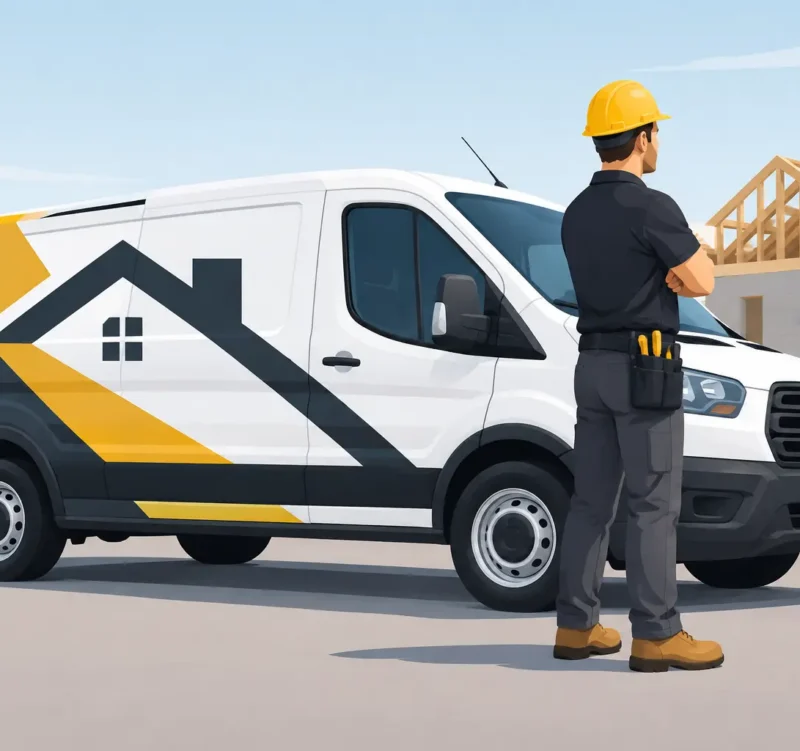
A contractor’s vehicle is already on the road, already parked in front of homes and businesses, and already seen by the people most likely to need the work. Vehicle graphics for contractors turn that everyday visibility into a clear introduction: who you are, what you do, and how to reach you when the next project comes up.
For local service businesses, this is not about making a truck look flashy. It is about looking established. A clean, consistent vehicle helps a homeowner feel more comfortable when it pulls into the driveway. It gives a property manager a name to remember. It also makes every trip across Wilmington, Sussex County, or the surrounding communities do more for your business.
Why Vehicle Graphics for Contractors Earn Attention
Contracting is built on trust, and trust often starts before a conversation. When a prospect sees an unmarked van at a neighbor’s house, they may not give it a second thought. When they see a professional vehicle with a recognizable company name, service description, phone number, and website, they have something useful to act on.
That visibility matters because contractor work is local by nature. Your audience sees your vehicles near job sites, at supply houses, in traffic, and in their own neighborhoods. Unlike an ad that disappears after a few seconds, a well-designed truck wrap or set of vehicle decals keeps working during the normal course of business.
The goal is not to cram every service, certification, and sales message onto a door panel. The goal is instant recognition. People should be able to understand your company at a glance, even when they are driving past you at a light.
Start With the Message Customers Need First
A vehicle has limited space and a moving audience. That makes prioritization essential. Your logo should be prominent, but a logo alone rarely tells a new prospect enough. Pair it with a short, plainspoken description of your primary service, such as roofing, electrical, plumbing, excavation, HVAC, remodeling, or commercial cleaning.
Then make contacting you easy. A phone number and website are usually the strongest choices. If your business receives leads through text messages or social media, those can be considered, but only if they can be read quickly. Too many contact options create clutter and make the important information harder to find.
A good hierarchy often works like this: company name first, service category second, and contact information third. If you serve a specific area, a simple line such as “Serving Delaware Since 2004” or “Wilmington and Sussex County” can reinforce local credibility. Use a claim only when it is accurate and meaningful to the customer.
Keep the Design Readable at Road Speed
The best vehicle graphics are designed for real conditions, not just a computer screen. Small type, thin script fonts, low-contrast colors, and crowded layouts can look sharp in a proof but disappear from ten feet away.
Choose colors with enough contrast to read against the vehicle paint color. A dark logo can get lost on a black van. White lettering may disappear on a light-colored pickup. Clean typefaces, strong color blocks, and generous spacing give the message room to work.
This is also where brand consistency pays off. Your vehicle should look like your website, business cards, yard signs, estimate forms, and job-site signage belong to the same company. When every customer touchpoint carries the same colors, logo, and tone, your business feels more organized before anyone asks for a quote.
Choose the Right Level of Coverage
There is no single right answer between simple lettering and a full wrap. The better choice depends on your budget, vehicle type, market, and how long you expect to keep the vehicle.
Vinyl lettering and spot graphics are a practical option for many small contractors. They can put your core information on doors, tailgates, rear windows, and side panels without changing the entire appearance of the truck. This approach is cost-conscious, straightforward, and effective when the message is clear.
Partial wraps add more visual impact by covering selected areas with color, patterns, images, or branded elements. They are often a smart middle ground for businesses that want to stand out but do not need every inch of the vehicle covered.
Full wraps make the strongest visual statement. They can transform an older fleet into a polished, unified brand presence and work especially well for highly visible service vans. The trade-off is cost and complexity. A full wrap needs strong design discipline, quality installation, and a vehicle that is in good physical condition. If the paint is failing or body repairs are overdue, address those issues first.
Design for the Vehicle You Actually Use
A box truck offers a large, flat canvas. A cargo van has broad side panels and rear doors. A pickup has less uninterrupted space, but doors, tailgates, and rear window areas can still communicate effectively. The design should respond to the vehicle rather than forcing the same layout onto every model.
Rear graphics deserve extra attention. Drivers spend time behind your vehicle at lights, in parking lots, and in traffic. Your company name, short service line, and phone number or web address should be easy to find there. Avoid placing critical details where door seams, handles, ladders, toolboxes, or trailer hitches will interrupt them.
If you operate several vehicles, consistency matters more than identical measurements. Your logo placement, colors, service line, and contact details should feel unified whether customers see a pickup, transit van, trailer, or box truck. That makes a growing fleet look intentional instead of pieced together over time.
Avoid the Common Mistakes That Cost Visibility
The most common mistake is trying to say too much. Listing ten services, three phone numbers, five certifications, and a long slogan may feel complete, but it asks too much of a passing viewer. Let your website, proposal, and sales conversation handle the details. Your vehicle should create recognition and prompt the next step.
Another mistake is treating graphics as a separate project from the rest of your marketing. If your truck carries an outdated logo while your website shows a different look, customers may wonder which version is current. Inconsistent branding can quietly undermine the professional image you have worked hard to build.
Finally, do not let price alone determine the decision. Low-quality materials, rushed installation, and generic layouts can peel, fade, or look amateurish faster than expected. A practical budget matters, especially for a small business, but value comes from a design that remains readable and professional over time.
Make Every Job Site Work Harder
Vehicle graphics are most effective when they support the rest of your local marketing. A homeowner may see your truck at a nearby project, search your company name later, and judge your business by what they find online. A current website, accurate service pages, strong reviews, and consistent social media profiles help turn that first impression into a call.
The same principle applies to job-site signs, uniforms, invoices, door hangers, and leave-behind materials. They do not need to match in a rigid, repetitive way, but they should all clearly come from the same business. That consistency reduces hesitation. Customers see a company that appears prepared, dependable, and easy to work with.
For contractors who rely heavily on referrals, this is particularly valuable. Your vehicle gives satisfied customers a simple way to share your name with neighbors. Instead of trying to remember a company from a conversation, they can point to the truck in the driveway.
Plan the Project Before Production Begins
Before approving artwork, confirm the exact vehicle year, make, model, paint color, and any accessories that affect the layout. Take note of windows, trim, ladders, fuel doors, dents, and areas that may be replaced or repaired. A precise vehicle template and a thoughtful review can prevent expensive surprises during installation.
It also helps to think ahead. Are you adding another truck next year? Do you expect to expand from residential work into commercial services? Will a new logo or website be launching soon? Building a flexible visual system now makes future updates easier and keeps each new vehicle on brand.
A local creative partner can help bring those moving parts together, from brand strategy and graphic design to print production and digital support. The advantage is not simply getting decals installed. It is making sure the vehicle reinforces the complete image customers see when they search, call, and decide whom to hire.
Your truck may be headed to a job, a supply run, or a quick stop between appointments. With clear, professional graphics, it is also giving your next customer a reason to remember your name. Look your best where your local market sees you most, and let every mile help get you noticed.